
Nutrition

Esther
The scale is not lying to you. It's just not telling you the whole story.
When someone starts training seriously at a gym like Big Tex, one of the first things they notice is that the number on the scale doesn't move the way they expected. Sometimes it doesn't move at all. Sometimes it goes up. And then they start to wonder if something is wrong, if they're doing it wrong, if this whole thing is working.
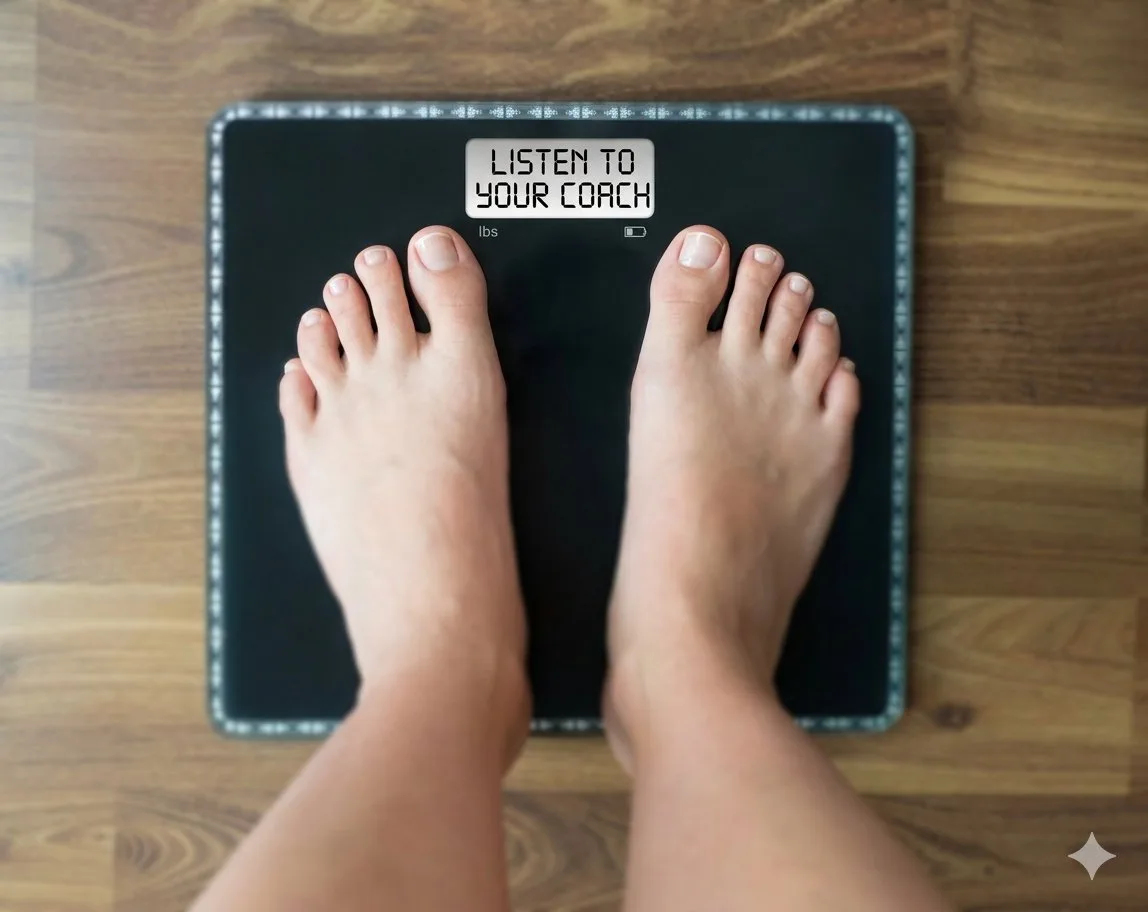
Nothing is wrong. And this is exactly why we tell new members to put the scale away for 90 days.
What's Actually Happening in the First 90 Days
When you start resistance training, your body goes through a significant adaptation process. Most of it is invisible on a scale.
Your muscles are storing more glycogen. Glycogen is the fuel your muscles use during training. It binds to water — roughly 3 grams of water per gram of glycogen. As your muscles adapt to training and get better at storing fuel, your body holds more water. This is a good thing. It means your muscles are becoming more efficient. It also means the scale can read heavier even as your body composition improves.
You're probably eating more. You should be. People who start training hard often aren't eating enough protein to support the work they're doing. When they correct this, total calorie intake goes up, which can temporarily reflect on the scale.
Inflammation from training. When you challenge your muscles, they experience micro-damage and repair. That repair process involves inflammation, which involves fluid retention. New lifters experience this more acutely than trained athletes. It's temporary, and it's part of getting stronger.
You may be gaining muscle while losing fat simultaneously. This is most common in people new to resistance training. Body recomposition — gaining muscle and losing fat at the same time — can leave the scale completely flat for weeks while your body is actually changing dramatically. The scale sees total mass. It doesn't separate the two.
What to Track Instead
The scale is one data point. It's not useless, but it needs context. Here's what actually tells you something meaningful in the first 90 days:
How your clothes fit. Specifically, how your clothes fit in different places. Pants getting looser in the waist but tighter in the quads is body recomposition. The scale will not show you this.
Strength progress. Are you lifting more than you were last month? That's your body adapting. That's the whole point. Log your lifts.
How you feel under load. Does a weight that was hard three weeks ago feel more manageable? That's a real change happening in your neuromuscular system. The scale has no opinion on this.
Photos. Take them the same time of day, same lighting, same poses, four weeks apart. Changes that are invisible week to week become obvious at the four-week mark. This is the most underused tracking method there is.
Energy and recovery. Are you sleeping better? Recovering faster between sessions? Less sore after the same workout? These are measurable outcomes that indicate your training is working.
Why Austin Gym Culture Gets This Wrong
Austin has a strong fitness culture, which is mostly a good thing. But it also means a lot of people come into training with expectations shaped by cardio-focused approaches to weight loss — where the goal is purely a smaller number on the scale, as fast as possible.
Resistance training doesn't work that way. The best gym in Austin isn't going to hand you weight loss in 30 days. What it's going to hand you is a stronger, more capable body that burns more at rest, performs better under load, and looks different at the same weight — or a higher one.
That shift in thinking is the work. The physical changes follow.
After 90 Days
At the 90-day mark, the initial adaptation phase is largely complete. Glycogen storage has stabilized. Inflammation patterns have settled. Your baseline is established.
This is when the scale becomes a useful tool again — if you want to use it. By now you have enough context to interpret what it's telling you. A 2-pound increase means something different to a three-month-in lifter than it does to someone on day 12.
Until then, train consistently, eat enough protein, sleep, and trust the process. The mirror and the barbell will tell you more than the bathroom floor ever will.
FAQ
Is it normal to gain weight when you start lifting?
Yes, and it's normal to be alarmed by it. Water retention from glycogen storage, increased food intake to support training, and inflammation from muscle adaptation all contribute. It's almost never fat gain, and it typically stabilizes within the first few weeks.
When will I start seeing results from lifting?
Most people notice strength changes within 2 to 4 weeks. Visible body composition changes typically become apparent around the 6 to 8 week mark, with more significant changes visible at 12 weeks. Progress photos taken 4 weeks apart are more reliable than daily scale readings.
How much protein should I eat when I start training?
A common starting point is 0.7 to 1 gram of protein per pound of bodyweight per day. If you're unsure, talk to one of the trainers at Big Tex — getting nutrition right in the first 90 days makes a significant difference in how quickly you adapt.